How Is It Possible for Ski Jumpers to Stay in the Air So Long and How Do They Train for That?

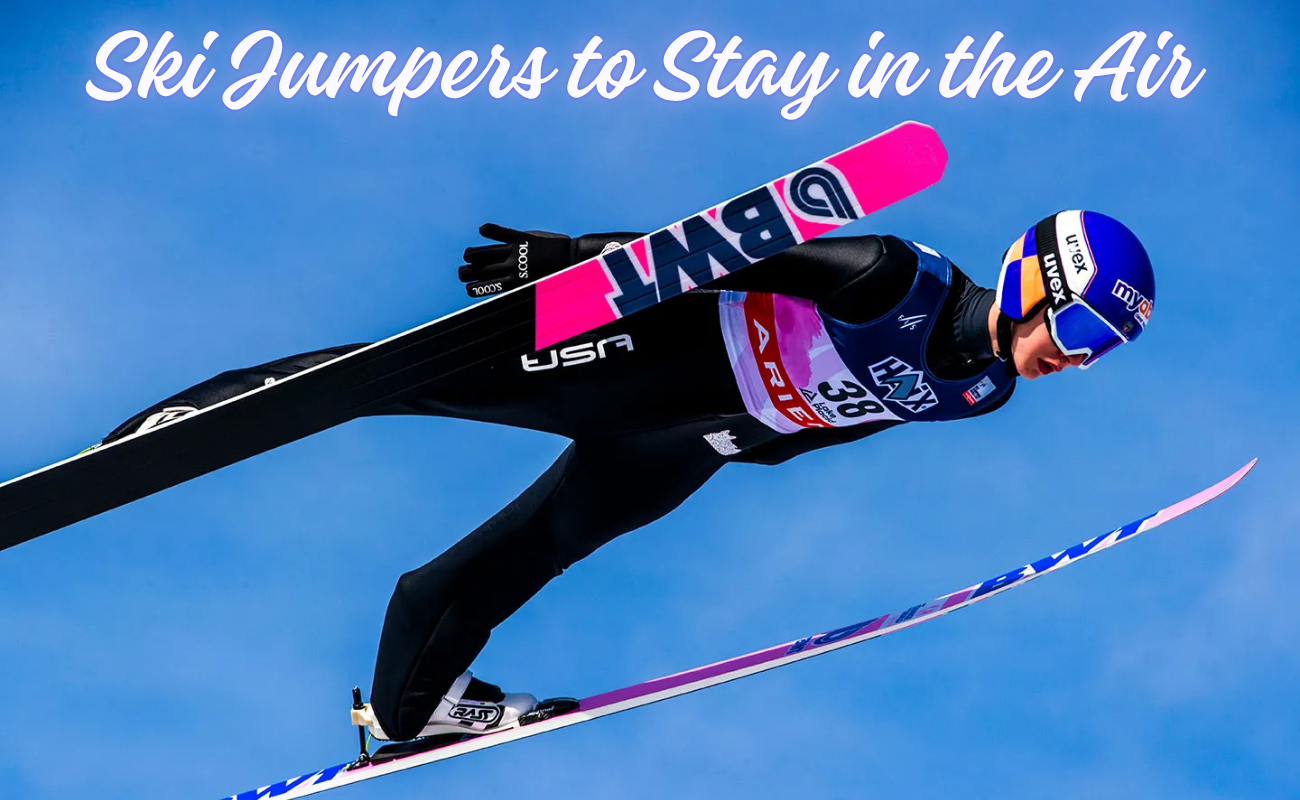
Watch a ski jumper off the ramp; what seems to happen is that he floats, skis through the air for 6 to 7 or even 8 seconds before his foot hits the ground. So how is it possible for ski jumpers to stay in the air so long, and how do they train for that? Short answer: It’s not magic, it’s applied physics, years of deliberate and very specific training.
The Physics: Turning a Human Body Into a Wing
Once a jumper is off the takeoff table, he or she is not just riding the momentum. They are actively creating lift and are using their body and skis as an airfoil, sort of a human wing.
- The V-style: Jumpers have been using the V-style since the mid-1980s, where skis have been spread in order to reduce the effort needed to make a jump. This new method of skiing spreads the skis out to create more air resistance and produces about 28-30% more lift than the old parallel method.
- Angle of attack: Jumps leaning forward until the torso is almost parallel to the skis, which puts them in an ideal angle (around 30 degrees) so that air is forced to stream under the skis. Newton’s third law states that the downward push of the air produces an equal upward force to that being applied on the jumper.
- Flight is a matter of balancing three forces: lift, drag, and gravity. A jumper in a good position may be able to move at a fairly slow rate downwards (2-3 m/sec) but still run extremely fast forward (25+ m/sec). The illusion of floating is due to that imbalance, which is when you are moving quickly while you are falling slowly.
The Reason Why Ramp Speed Is So Important
This lift is not possible at all without some serious speed. They accelerate down the in-run to a crouched, aerodynamic speed, to reach the take-off table at speeds exceeding 90 km/h (56+ mph).
The body position is tucked in and the form-fitting suits reduce drag on the down-stroke, meaning that all the energy is used to increase velocity towards the ground at take-off. That’s really the key to how ski jumpers are able to maintain their flight for such a long time with high entry speed and optimal body position.

Read Also: What is a Google Fan? Discover the Ultimate Interactive Google Fan Experience
Ski Jumpers Preparing For the Flight
It is not an easy task to do it right, it requires a lot more than natural talent.
Wind tunnels. The athletes then lie inside the wind tunnel, while the engineers make measurements in real time and the jumpers adjust their body angles by millimetres until they get the lift and drag they want.
Summer ramp training. Plastic or ceramic surfacing allows jumpers to train and repeat takeoffs all year, rather than just in the snow.
Explosive strength work. The takeoff is an explosive leg extension, and jumpers train for explosive power, balance and core stability to withstand the power of takeoff.
Video analysis. Coaches dissect each jump, frame by frame, making adjustments to the arm position, lean angle and timing.
Mental preparation. On top of a big hill, in milliseconds committing to a jump takes mental conditioning and that is taken seriously as much as physical conditioning.
A Quick Note on History
The V-style was not a standard fashion in the past. It was first experimented with by Swedish jumper Jan Boklöv in the mid 1980s, and was initially given sanctions for being unconventional. The additional jump produced couldn’t be denied, and by the early ’90s, it was the preferred method of all top jumpers in the sport.
Final Word
Ski jumping appears to be magic but it is, in fact, physics in action. The sport of jumping is a contest in which the jumper’s body and skis turn him into a human wing as the speed is translated to lift. Throw in endless hours of training, wind tunnels, explosive strength work and thousands of reps and those few seconds of “floating” are the result of decades of refinement. It’s an illustration that science and hard work can take athletes as far as their talent.
FAQs
1.How far can the ski-jumpers go?
At the highest levels of jumping, elite skiers in ski flying and on large hills can remain in flight for approximately 6-8 seconds or longer depending on conditions on the hill and the wind.
2.Why do ski jumpers spread their skis into a V shape?
The V shape allows them to increase surface area to create much more lift than the parallel-ski shape, which helps them to get through the air farther.
3.What speed do ski jumpers reach prior to jumping?
Generally jumpers hit the in-run at speeds of over 90 km/h (approx. 56 mph) before jumping off the ramp.
4.Why can ski jumpers remain in the air for such a long time versus a regular jump?
The difference with a normal jump is that the ski-jumpers create the lift from the angle of the ski and their body position.
5.Would you like to try some ski jumping?
Absolutely, high speeds, large hills and a need for careful body control can result in serious crashes, hence the emphasis on technique and training at elite level.
Read More: Compare Corbett and Ranthambore for a 5-Day Wildlife Photography Trip in November on a ₹50K Budget