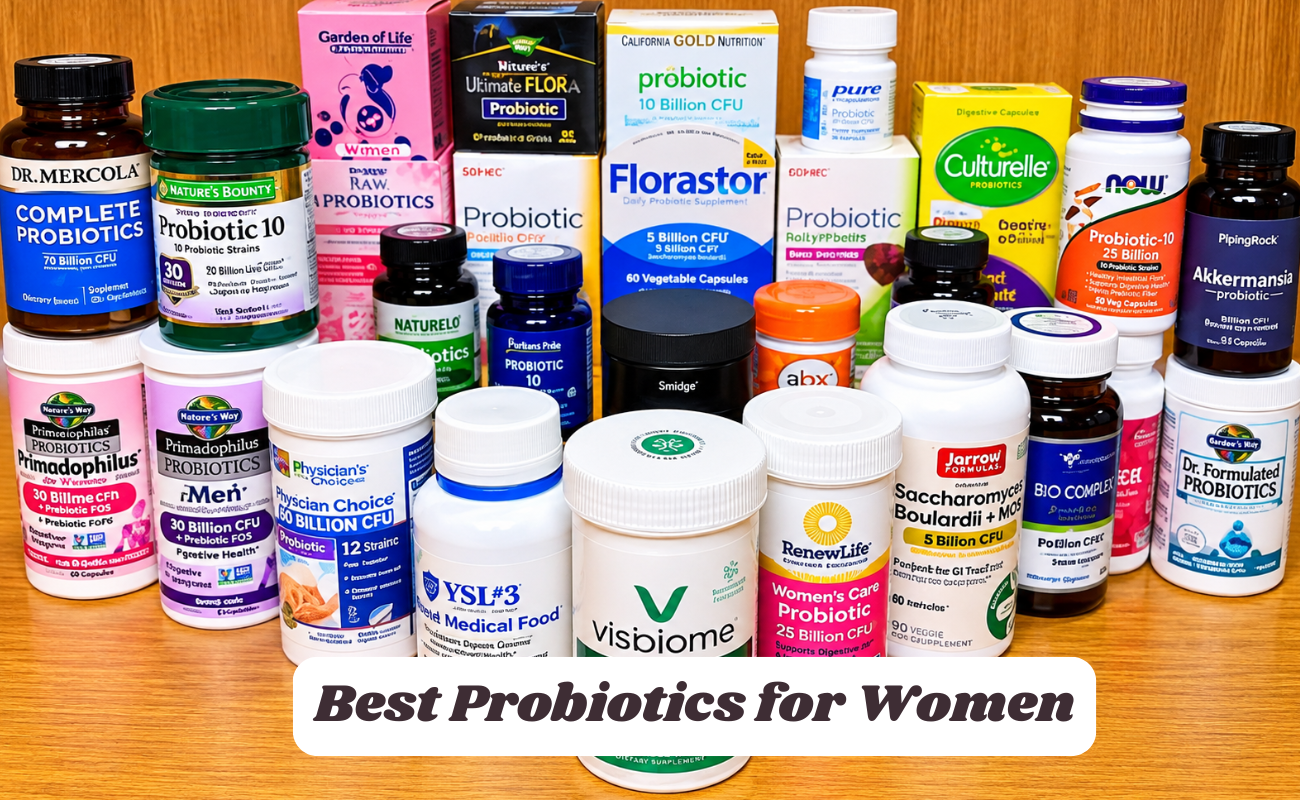
Looking for the best probiotics for women? Probiotics are live “good” bacteria that help maintain your gut, vaginal and overall health. But, no single product is suitable for all people. This will depend on the strain, your health objective, and the dosage.
This article explains the main types, plus uses, dosage, side effects, and precautions, in plain English. Always check with a healthcare professional before starting a supplement.
What Are the Main Types of Probiotics for Women?
There is no one “best” probiotic for all women. Probiotics exist in families and each family contains numerous strains with varying effects. Two stand out.
Lactobacillus
This is where most good bacteria in the vagina can be found. Promotes pH balance, prevents the growth of harmful bacteria and can reduce inflammation.


Bifidobacterium
The gut is supported by this group. It helps in digestion, fortifies the wall of the gut, and protects against harmful germs.
Uses and Health Benefits of Probiotics for Women
These are benefits that may occur but that can’t be guaranteed, as research is continuing.

- Vaginal health: Probiotics can be used to support the health of the vagina, for instance in treating yeast and bacterial vaginosis. Search for L. crispatus, L. rhamnosus or L. reuteri.
- Mood and anxiety: L. helveticus and B. longum have been investigated in relation to mood. Probiotics should not be a substitute for drugs or therapy.
- Gut health: B. lactis, B. longum, and L. plantarum can help alleviate constipation and irritable bowel syndrome (IBS).
- Weight management: L. gasseri and B. bifidum can be used as a promising strain.
- Immunity: Certain Lactobacillus blends have been shown to lessen colds, but which blend is the most effective strain remains unknown.
- Pregnancy and breastfeeding: Probiotics seem safe and could help relieve constipation and reduce the risk of mastitis.
How to Choose a Women’s Probiotic
Here are some things to remember:
- Pair the strain with your health objective.
- Search for third-party testing done by USP, NSF or ConsumerLab.
- Look for added sugar, allergens and fillers on the labels.
- Choose those products which have clinical research support.
- Select a form you will use, like capsules or powder.
Compare prices. The price of a bottle of 50 capsules is approximately $12-50.
Read also: CCU Full Form Explained in Simple Words
Probiotic Dosage and Best Time to Take
It is dependent upon the product and strain. The American Academy of Family Physicians recommends 10-20 billion CFU (colony-forming units, a measurement of the number of live bacteria) per day for adults. Typically, people take 1 to 2 capsules per day.

Consume probiotics at the same time as or about 30 minutes prior to eating. Results vary. Antibiotic-related diarrhea can get better in 2 days, vaginal symptoms will begin in about 7 days, and IBS will take 8 weeks or longer.
Possible Side Effects
Probiotics are considered safe. The most common side effects are less severe gas and bloating that may subside as the body adapts. If symptoms last or get worse, stop taking the supplement and talk to your doctor.
Precautions Before You Start
Probiotics may be harmful if you have a severe infection or a weak immune system. Please consult with your physician before taking if pregnant, lactating, or on medication. Probiotics can be used to assist treatment but cannot replace treatment.
Can You Get Probiotics From Food?

Yes. The probiotics are found in yogurt, kefir, sauerkraut, tempeh and kimchi. Remember to include fibre as it nourishes the good bacteria in your gut. The average woman should get 21 to 25 grams per day.
Final Word
The top probiotics for women will rely on the health objective, strain and dosage. Use a product that has been tested, read the instructions on the label and be aware of any potential side effects. Consult your health care provider before, particularly if you are pregnant or have a health condition.
FAQs
1. What is the most effective probiotic for a woman’s vagina?
Lactobacillus strains that have been the most studied include L. crispatus, L. jensenii, L. gasseri, L. rhamnosus, and L. reuteri.
2. How much probiotic should a woman take daily?
The dose for adults ranges from 10 billion to 20 billion CFU per day, depending on the strain and product. Use as directed on the label and consult with a health care provider.
3. Do probiotics have side effects?
They are generally mild, such as gas and bloating, and should resolve in a few days. Those with compromised immune systems or severe illness should refrain.
4. Can probiotics be taken by pregnant women?
Studies have shown that they are safe during pregnancy and lactation, and have few side effects, including flatulence. However, consult a health care provider before beginning one.
5. How long does it take probiotics to work?
It would depend on the reasons you have for taking them. Antibiotic diarrhea may get better in 2 days, vaginal benefits within a week, and IBS can last for 8 weeks or more.
Read More: WellHealthOrganic Fitness Tips: A Holistic Guide to Getting Stronger