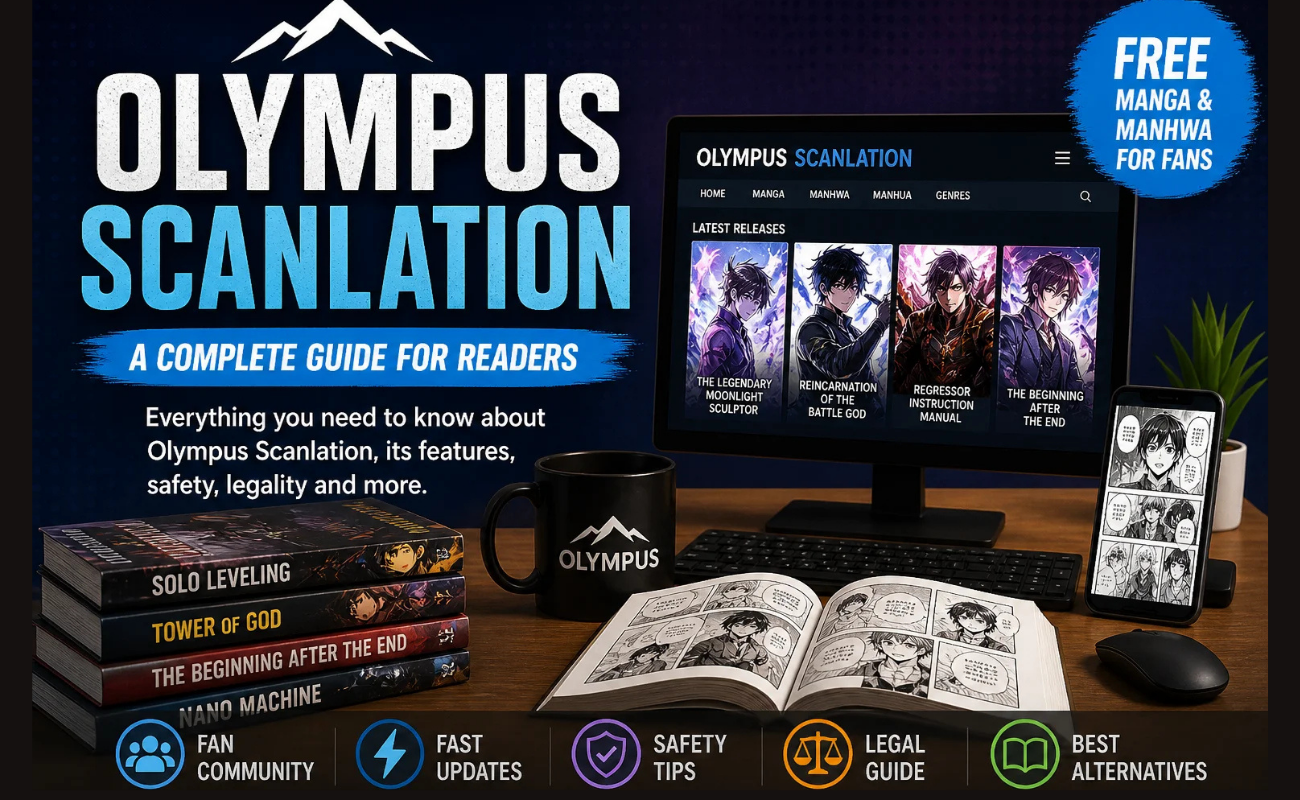
Olympus Scanlation translates manhua, manhwa and manga into English for the world. All work from scanning the raw pages to adding translated text to speech bubbles is completed by the volunteers without pay. Millions of readers use stories which publishers haven’t officially licensed in English. It has been in existence for several years and is publishing chapters on a regular basis.
All work is done through the efforts of the community. Translators, editors, and typesetters discuss and work together via Discord servers and online forums.Translators, editors and typesetters talk to each other and collaborate on Discord servers and online forums.
How Olympus Scanlation Turns Raw Pages Into English Chapters
Readers do not see each chapter which goes through six stages before reaching them. Raw files are received from the Japanese, Korean or Chinese sources. Translators will translate the dialogue while maintaining the cultural references.
Using image software, editors will delete the original text contained in the speech bubble. The English translation is put in by typesetters into cleaned artwork. Different fonts are used in each scene to reflect the mood of the scene, with bolder fonts used for action scenes and softer fonts used for quieter scenes.
The proofreaders make sure of grammar and make sure that the characters’ names are consistent. There is a final quality review to ensure that the images have the required resolution and the text is aligned before it’s released.
| Stage | Time Required |
| Scanning | 30-60 minutes |
| Translation | 2-4 hours |
| Cleaning | 1-2 hours |
| Typesetting | 1-3 hours |
| Proofreading | 30-60 minutes |
| Quality Check | 15-30 minutes |
Genres and Release Schedule

The library features action, romance, mystery, fantasy and thriller. Titles are noted here first if they don’t have an official English translation. Depending on the demand of the series, chapters are released once a week or once every two weeks.
Popular series are updated on a daily basis within 24 hours of the original publication. High demand books are read quickly by readers.
The Majority of Translated Content Categories
The number of active projects is the highest for Korean manhwa. Japanese comic book is the second largest category. The other releases have been made by Chinese manhua.
The next series are selected by a vote of the community. New projects are decided upon by Discord Polls held quarterly.
Why This Group is Preferable to Other Groups
All chapters are free! There are no pop-ups or advertisements that pop up while your are reading. Productivity and quality at par with professionals with no budget.
Many titles are licensed by publishers over a period of years. Fan translations are a solution to that. Readers find stories that they can’t find in English.
This is the group that’s separated from others by community discussion. The rehearsal is live, with members discussing the chapters. Feedback is provided straight to translators via social channels with a view to enhancing future releases.
Read Also: Techcarz com: A Platform for Technology News, Gadgets and Future Innovations
Is It Legal?
Fan translation is in a grey zone in the law. In theory, manga artwork and dialogue is protected by copyright. Unauthorized translation can be in violation of those protections.
There’s a definite rule in the group. Any title is halted as soon as a publisher announces an official license. This way, you can honour creators and still have access to the content until official versions become available.
Publishers don’t normally sue fan clubs themselves. There have been many who have recognised that fan translations help to create demand overseas. Community-created titles can seem to catch-on, leading to a later licensing agreement from officials.
Publisher Reactions
Games such as Manga Plus and Crunchyroll have added a ton of games to their libraries. Many bestsellers have been released simultaneously in Japanese publications.
There are publishers that send takedown notices to aggregation sites. The group is in compliance with these notices and takes it down as per them.
The Cultural Value of Fan Translation
Fan translations contain not only story, but culture as well. Folklore from Japan, Korean themes and Chinese history permeate a wide variety of readers who were unlikely to encounter them otherwise. All communities in North America, Europe and South Asia benefit.
Students of the language employ chapters as learning material. Reading comprehension and vocabulary is developed by comparing translations of original texts to English. For some, the translation notes are informative, providing context that enhances the learning experience, as well as being entertaining.
Challenges the Translation Team Faces
A reading direction that is right to left causes problems for the adaptation of English. Manga is read in the opposite direction to western comics; from right to left and from top to bottom. It is up to a translator whether they will turn the pages over or leave the format of the pages.
There are sound effects to add to the challenge. Often Japanese onomatopoeia is incorporated into the artwork itself. The replacement will need to be done with precision for it not to need to redraw panels.
The font used makes a difference to the reader. Handwritten styles are appropriate for informal communications. The bold font is used for scenes with lots of action. Each genre comes with its own typographic requirements.
The distribution is also slow, due to the size of the files. High resolution images need to be compressed but not lose resolution.
Final Word
It is a true community effort that has been made by Olympus Scanlation. The volunteers do not get paid to translate, edit and typeset the comics from Asia to English speakers around the globe. The group has an actual deficiency that is sorely needed that the official publishers haven’t been paying attention to. Whether it’s reading for fun or to learn a language or just for culture, what this community produces is truly amazing. With the growth of official platforms this fan translation group is playing a huge role in the translation of the world’s manga.
FAQs
1.Are their uses of Olympus scanlations legal?
Fan translation is somewhat in a grey area. As with any art, it is illegal to translate manga without permission, unless that translation is free of original content. Once an official English license is announced, the group removes any title they have.
2.Does it require any fee from readers?
No. All chapters are free! There are no advertisements of this group on official releases, it is volunteer based and operated.
3.May I be a part of the translation team?
Yes. The recruitment is done via Discord and social media. The role is that of translator, editor and typesetter. In most teams, the samples of work are requested when applying for a position.
4.How often is the new chapter published?
The series are popular and updated on a regular basis. Smaller and/or less active projects are scheduled on a monthly or irregular basis as it relates to team availability.
5.What is the source of the releases?
Chapters are disseminated via aggregator websites, Discord pages and communities and social media pages kept by the group.
Read More: URLWO Explained: What It Is and Why People Are Talking About It